Modified Bloxham Neighbourhood Plan
Referendum – 27 August 2026
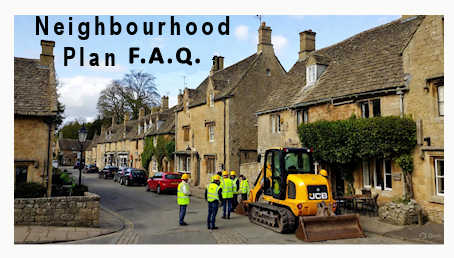
Frequently Asked Questions from Residents
Please note that the Parish Council is expressly prohibited from endorsing a specific outcome for the upcoming Referendum on the Modified Bloxham Neighbourhood Plan.
The purpose of this set of FAQs is to answer directly, questions that have been asked of the Parish Council, by residents of Bloxham and to provide clarity on particular issues and processes in relation to the Plan. It is a matter for the residents of Bloxham themselves to determine whether they wish to endorse the Modified Bloxham Neighbourhood Plan.
How can I contact the Parish Council with more questions regarding the Modified Bloxham Neighbourhood Plan and the Referendum process?
You can contact the Parish Council using the email address below:
bloxhamndp@bloxhamparishcouncil.gov.uk
The Parish Council will endeavour to answer your questions as accurately as we are able, within the guidelines provided by the Cherwell District Council’s (CDC) Monitoring Officer.
What am I voting for and when?
A Referendum will be held on Thursday 27 August 2026, from 7am to 10pm, to decide on the question below:
‘Do you want Cherwell District Council to use the Neighbourhood Plan for Bloxham to help it decide planning applications in the neighbourhood area?’
There will be no other options.
Do I need photo ID to vote?
Yes, you will need to show photographic identification to the polling station staff. The Referendum is run in the same way as a local election. If you are on the Electoral Register, you should receive a Poll Card. If you need any help, you can call 01295 227005. However, you do not need a Poll Card to vote.
I don’t want any more houses in Bloxham, we are already too big for the facilities we have. What can we do?
Bloxham is designated by CDC as one of the most sustainable Category “A” villages in the District. As CDC is not able to provide a 5 year housing land supply to meet targets set by the Government, the best defence against more developments is to have a Neighbourhood Plan. The Plan must comply with the CDC Local Plan and this requires the village to have some new houses to support this target. The Modified Bloxham Neighbourhood Plan allows the community to identify the most suitable site in the village for this development.
What does allocating a site mean?
Allocating a site in a Neighbourhood Plan gives a local community legal power to influence where new homes go. Without an allocated site, CDC could assign less suitable sites – an example being the recent approval on Barford Road for 100 houses. It makes it harder for speculative developments to gain planning permission once the Plan has been approved at Referendum, with an allocated site.
An allocated site in a Neighbourhood Plan is NOT the same as having planning approval. Any future developer of the site, still needs to follow the full planning process to gain planning approval.
Is Painters Farm and Hobb Hill the same?
Hobb Hill is the generic name applied to the area of land behind Courtington Lane, across Hobb Hill, down to Ells Lane. Painters Farm is the name of the proposed development on the lower area of Hobb Hill behind Courtington Lane.
I keep hearing about tilted balance and the 5 year land supply, what does this mean? The “tilted balance” is a rule in UK planning policy under Paragraph 11 of the National Planning Policy Framework (NPPF) that heavily favours approving development. It is triggered when a local council lacks a five-year housing land supply, which CDC currently does not have. Consequently, planning permission must be granted unless the negative impacts “significantly and demonstrably” outweigh the benefits.
How does having a Neighbourhood Plan help to stop speculative developments? An up-to-date Neighbourhood Plan can disengage the tilted balance in favour of development under specific conditions, primarily outlined in Paragraph 14 of the NPPF.. These are:
- a) the Neighbourhood Plan became part of the development Plan five years or less before the date on which the planning decision is made; and
- b) the Neighbourhood Plan contains policies and allocations to meet its identified housing requirement as part of the CDC local plan.
I don’t want houses built on Hobb Hill, if I vote “no” will this stop any development here? Not necessarily, the developer could still submit a planning application for the Painters Farm site at the bottom of Hobb Hill and without the protection of an up to date Neighbourhood Plan, the ’tilted balance’ outlined in the NPPF would still apply favouring development.
Cherwell District Council recently refused a planning application for houses behind the Recreation Ground, so why do we need a Neighbourhood Plan?
The CDC Planning Officer initially recommended granting permission for this development of 95 houses. The decision to refuse the planning application was made by the Planning Committee because CDC Councillors recognised that the development would have been contrary to a number of policies in the Modified Bloxham Neighbourhood Plan, which had been approved by CDC in June 2026, and also had a Referendum date set for residents to vote on it. If the Plan had been less advanced, it would have carried less weight and the development may well have been approved, as was the Barford Road development in June 2026 under the terms of the NPPF ’tilted balance’.
If we vote “No” can the Neighbourhood Plan be modified for a different allocated site and the process be started again?
Yes, the Modified Bloxham Neighbourhood Plan could be started again. However, the formal consultation and review process that has to be completed after a Modified Plan is written, can take up to a year in addition to the re-drafting exercise. The process for amending and updating the current Plan, from start to finish, has been circa two years. Whilst a new version of the Modified Plan is being drafted, Bloxham would not have an up to date Neighbourhood Plan in place, so would have no tool to disengage the tilted balance afforded to in favour of development because of CDC’s lack of a five year housing land supply. As a consequence, planning applications are more likely to come forward and be approved.
When the process for modifying the Plan started, Government funding was available, however, this has now been withdrawn and is no longer available. Any remedial work would have to be funded by the Parish Council.
What does it mean if the Modified Bloxham Neighbourhood Plan isn’t adopted at the Referendum?
The existing Neighbourhood Plan was created in 2016 and valid to 2031, however as it ages it carries less weight and due to changes in the NPPF and housing targets defined by the Government is consequently out of date in terms of the NPPF. Therefore, if the Modified Bloxham Neighbourhood Plan is not adopted at Referendum, the ’tilted balance’ in favour of development is likely to be engaged, as CDC do not have a 5 year land supply and would therefore, have limited grounds to refuse future planning applications in the village.
The application by David Wilson Homes application for 95 houses (behind the Recreation Ground) would likely be taken to appeal which CDC would be likely to lose as they can’t demonstrate a 5 year housing land supply and no Neighbourhood Plan would be in place – as was the case in 2025 with the successful Gladmans Quarry Close appeal.
The developer for Painters Farm is likely to submit a planning application for up to 125 homes that would follow the same process as David Wilson Homes. In addition, the Parish Council is aware of other developers with plans for other sites around the village that could take advantage of the situation and apply for planning approval.
What does it mean if the Modified Bloxham Neighbourhood Plan is adopted at the Referendum?
It gives Bloxham a voice that has weight. An adopted Neighbourhood Plan carries full statutory weight in the planning system. It becomes one of several documents, including the CDC Local Plan, which make up the official development plan for the local area, and planning decisions must be made in accordance with it unless material considerations indicate otherwise.
For housing developments, it can engage NPPF para 14, which recognises the adverse impact of allowing development that conflicts with the Neighbourhood Plan and is likely to significantly and demonstrably outweigh the benefits, provided the following apply: a) the Neighbourhood Plan became part of the Development Plan five years or less before the date on which the decision is made; and
- b) the Neighbourhood Plan contains policies and allocations to meet its identified housing requirement.
Why did the Parish Council pick this site for development?
As part of the Neighbourhood Planning process a total of 17 potential sites were reviewed by AECOM (Global Consultancy Company providing Environmental Services) as part of the Strategic Environmental Assessment. This process shortlisted 2 sites capable of providing similar community benefits, with the exception of land for future development of the Primary School. One site was 125 homes, the other 230. The decision was the 125 homes site which was closer to the heart of the village and necessitated fewer car journeys to access schools and community facilities. The Independent Inspector made the following comment in his report about this decision:
“I consider that the Parish Council has made a legitimate choice. It has weighed the factors relevant to the two sites and has come to a reasoned conclusion”.
The new Plan wasn’t checked by anyone in the village, why not?
The Parish Council was required to conduct community engagement activities before submitting the Draft Plan to CDC. During July and August 2025, 7 community meetings were held to stimulate debate and inform residents about the Plan. In addition, the usual monthly Parish Council Meetings and Drop-In and Chat sessions were held where residents could raise questions. There were two formal consultation periods in late 2025 and early 2026, during which residents were able to comment. The final decision as to whether to adopt the Neighbourhood Plan, rests with residents at the Referendum.
Does Cherwell District Council still have a Planning Department?
On 15th June 2026, the Government placed Cherwell District Council into special planning measures, mainly due to the number of planning appeals they had lost. This means developers submitting major planning applications of over 100 houses can choose to apply directly to the National Planning Inspectorate for a decision rather than CDC. In this instance CDC becomes a consultee, but essentially the same NPPF rules and policies will continue to apply.
What is the National Planning Policy Framework?
The National Planning Policy Framework (NPPF) is a core document detailing the Governments Planning Policies, how local councils must shape their development plans, and how individual planning applications get decided. It is the rulebook used by CDC Planning to evaluate housing developments. At the heart of its core principles is the presumption in favour of sustainable development. This can result in the tilted balance being engaged in favour of development when a Planning Authority doesn’t have a 5 year housing land supply.
What happens to Hobb Hill?
The Plan does not propose housing across the whole of Hobb Hill. Housing is shown mainly on the lower section referred to in the Modified Bloxham Neighbourhood Plan as Painters Farm, with a substantial area around Hobb Hill retained as public open space. Existing public rights of way are protected and the proposals include additional permissive access to create a circular walk, a viewing platform and picnic area.
What about our existing problems with flooding?
A Neighbourhood Plan cannot normally require developers to fix every existing infrastructure problem, but new development must address the demands it creates and should not make existing problems worse.
For Painters Farm specifically, the Modified Bloxham Neighbourhood Plan requires an up-to date Flood Risk Assessment and a Sustainable Drainage System (SuDS). The policy states this should manage drainage from the development and seek to improve surface-water management around Hobb Hill and Tadmarton Road.
Where can I check the information for myself?
The full Referendum version of the Modified Bloxham Neighbourhood Plan, supporting evidence, independent examiner’s report can be found on the CDC website. https://www.cherwell.gov.uk/downloads/download/476/bloxham-neighbourhood-plan


 Click for recent planning applications.
 Click for emergency contacts
 Click for Bloxham Weather
 Click for Local Traffic Report
 Click for Air Train Bus Info
Recent Comments